Showing posts with label Dylan Thomas. Show all posts

Jun 6, 2014

D.H. Lawrence's "Bavarian Gentians" and Dylan Thomas, Follow-up


Here is D.H. Lawrence’s poem, “Bavarian Gentians.” I think I know why it came to mind as I talked last time about Dylan Thomas and “The Force that through the Green Fuse Drives the Flower," but I'm not sure. Ideas?  Which of the two poems do you prefer, and of course, why?

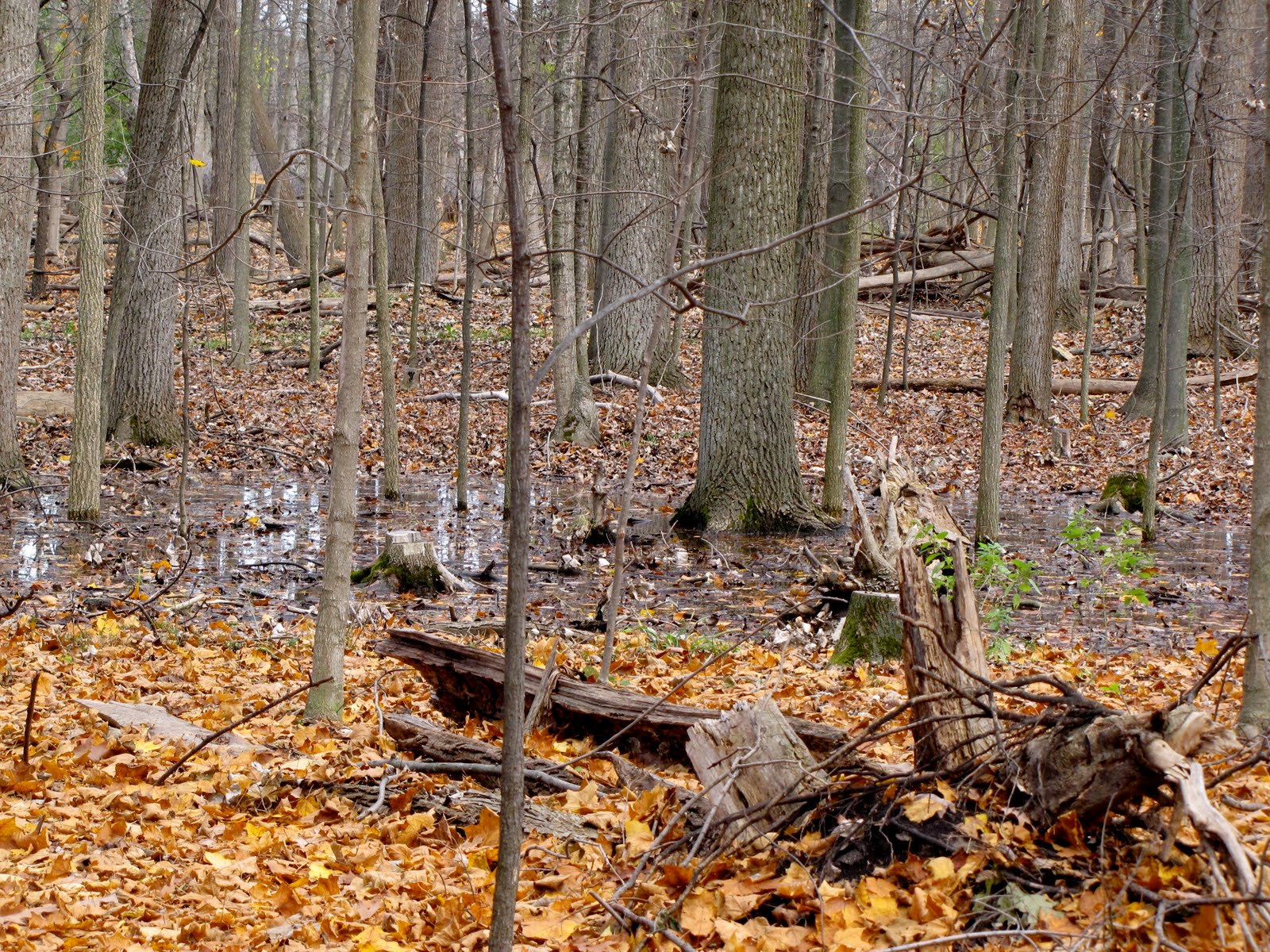
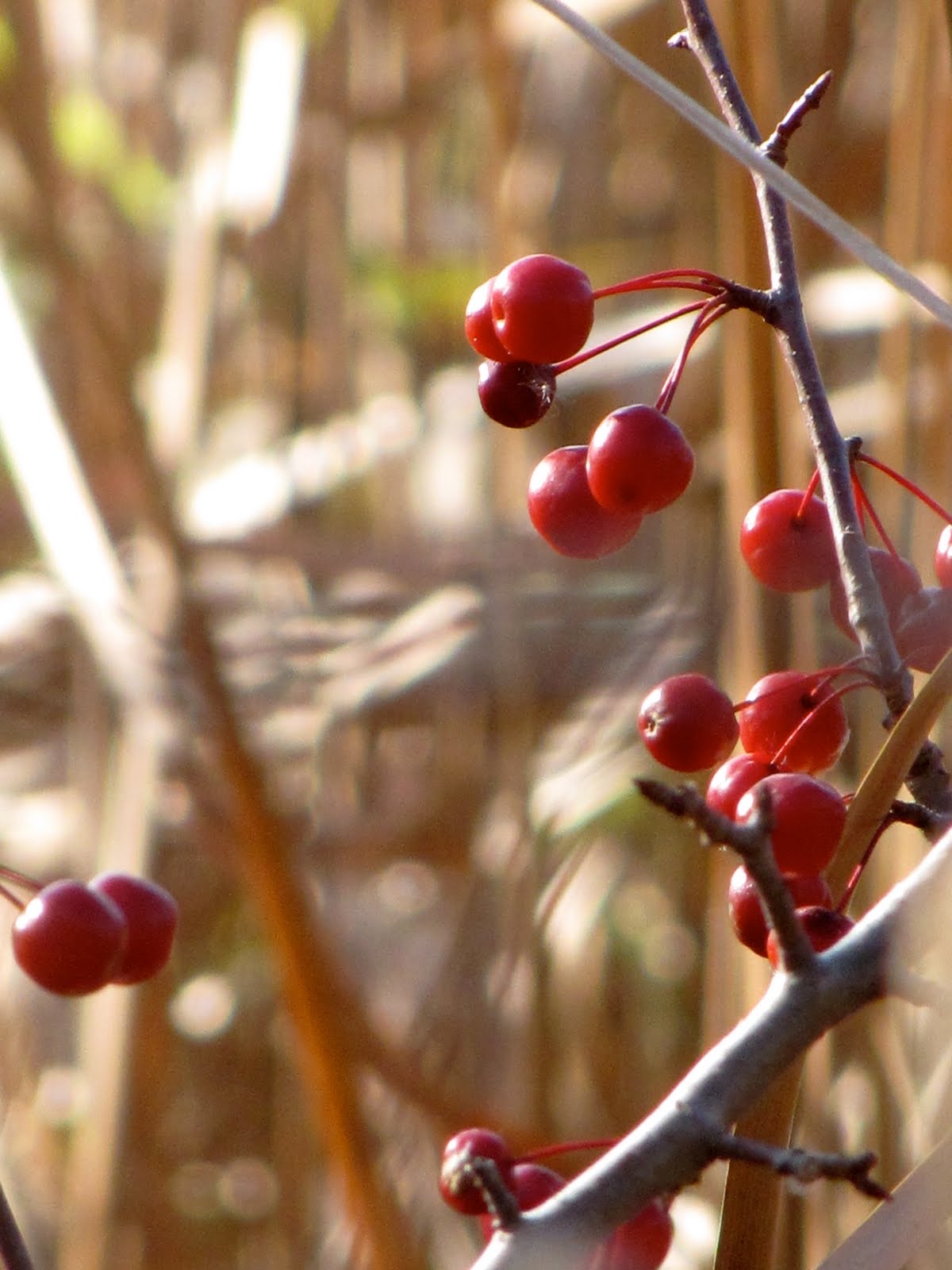
I don't have a photo of a Bavarian Gentian, but I'm including some with important blues or purples and darkening and excess.


My posting twice about the same poem has never elicited much visitor interest, but sometimes I just can’t help myself. Here are some further questions and thoughts about Dylan Thomas’ “The Force That through the Green Fuse Drives the Flower.”


One word that might confuse or alienate readers is “the green fuse,” which I take to mean the flower’s stem. Does Thomas get enough bang for his buck with “fuse” as a metaphor? In exchange for potential confusion in some readers, what, if anything, does he gain by using “fuse”?

Same question for “dumb”?

Why is the poem so full of violence? About a hundred and fifty years before Dylan Thomas came along in Wales, the English Romantics, especially Wordsworth, had conceived of a dynamism in Nature—its potential for destructive activity along with its beauty and spirituality. But isn’t Thomas going further than the Romantics in seeing and insisting upon Nature’s fearsome extremes and thus complicating its beauty with its violence? Thomas’ Nature wreaks such havoc that he cannot express its extremes; he can only give examples and ask us to perceive natural presences as he does. 

Do you think a single force governs the life and death of humans, plants, and animals? Are we that much a part of nature?

Where in the human being would you locate that force? The heart? The brain? The mouth? The hand? The genitals? Or the mind or soul or spirit?—none of which can be located on an anatomical chart.
English teachers are sex-crazed nerds; that’s old news. Therefore, I ask if the poem has anything to do with sex—potency and lack of it, or Freud’s “libido” versus “thanatos.” I’m pretty sure I recall accurately that Freud expanded his concept of the libido from a specifically erotic drive to a broader meaning of life force, a quest for survival, which of course was in continuous conflict with “thanatos,” or death drive.

Thus, Freud, like the Romantics, saw the essential condition of humans as one of tumult,  inner turmoil, conflict, unlike Buddhism’s sense of a calm inner place, nirvana, which we should try to reach. Do you favor one of these views of human nature over the other? If the human is an onion and you keep peeling off layers, what’s at the center—a roiling ocean or a still pond?

May 28, 2014

Spring and Dylan Thomas' "The Force that through the Green Fuse Drives the Flower"


I'm pretty sure I was a college freshman when I first encountered Dylan Thomas' "The Force that through the Green Fuse Drives the Flower," and I'm pretty sure I had no clue what it meant or why anyone would write such a thing or why I was in college or where Wales was or why anybody lived there instead of Ohio.

Well, here is the poem again. I think it's one of the great works about the mysteries and rhythms of all kinds of life. And death. Yin and Yang, I suppose. Libido, broadly defined, and Thanatos?

http://www.poets.org/poetsorg/poem/force-through-green-fuse-drives-flower

In the photos from early May, a Great Egret kept retrieving sticks for his nest. (For obvious reasons, I'm making him a hard-working male). I don't know how it could have been clearer that a natural force was driving him to go fetch and to come back, again and again. And maybe that force is larger and more complex than anyone can explain. Hence, the repetition of "I am dumb."

Dylan Thomas claims it's that same force that drives a flower through its stem (its "fuse") and propels a human through his green age, even though it's also the force that brings death to lovers and to us all. The poem is an interesting combination of elegant, romantic, musical language and thought with a realistic insistence that what lives also dies.

I especially love these lines:

And I am dumb to tell a weather’s wind
How time has ticked a heaven round the stars.

Dylan Thomas may be as romantic and effusive as e.e. cummings about nature, but maybe Thomas is more realistic and complex. Opinions?

http://www.poets.org/poetsorg/poem/force-through-green-fuse-drives-flower


*

Aug 24, 2010

The Collins Kids again, Jacques' "Seven Ages of Man," "Fern Hill"


If you'd rather, feel free to skip to the bottom with Shakespeare and Dylan Thomas, for I realize I've gotten carried away with the Collins Kids. It's just that I still cannot figure out how, growing up at the edge of Appalachia, I completely missed them, unless they were just too far west, on an Oklahoma farm, then in California show biz.

Here are some tidbits: Lorrie Collins was Ricky Nelson’s first steady girlfriend (http://www.rockabillyhall.com/CollinsKids1.html.). She also performed with Johnny Cash and Willie Nelson. After Lorrie's retirement to motherhood in 1961, “the Collins Kids remained silent until they reunited to much acclaim in 1993. By that time Larry had become a successful producer and writer, penning country classics like ‘Delta Dawn’ and ‘You’re The Reason God Made Oklahoma.’” (www.ponderosastomp.com/).

YouTube - Tanya Tucker-Delta Dawn

YouTube - Collins Kids, Bimbo's, San Francisco, December 1993

YouTube - Collin Kids - Documentary about Lorrie and Larry

So maybe there are some happy endings in the lives of country music artists.

All this leads to the too familiar theme of the stages of life, so here is Jacques (remember to Anglify it to "Jay-Queez," though I never learned why) in Shakespeare's As You Like It, with his Seven Ages of Man speech.

YouTube - "7 Ages of Man" from "As You Like It" (Nicholas Pennell)

And here again is Dylan Thomas's "Fern Hill." (Today I'm finding Wordsworth just embarrassingly gassy. The Welshman is concise by comparison.).

Fern Hill by Dylan Thomas : The Poetry Foundation [poem] : Find Poems and Poets. Discover Poetry.

Tell me where else you're going to find Rockabilly child stars, Shakespeare, and Dylan Thomas under one umbrella, and everybody getting along just fine.

**

Jul 29, 2010

STRATFORD, ONTARIO, THEATER, DYLAN THOMAS

The Force That through the Green Fuse Drives the Flower by Dylan Thomas : The Poetry Foundation [poem] : Find Poems and Poets.


Stratford, Ontario is a city of 30,000 in hilly, prosperous farmland two hours west of Toronto. It feels almost English as England does; otherwise, it’s an unlikely place for first-rate professional theater to thrive, but it does, and about half of it is Shakespearean.

Stratford has four theaters, a thriving downtown, all kinds of eateries, a few bookstores (used and new), a mile-long lake with rich greenery and walkways, just down a hill from the main drag (Ontario Street). There are scores of walkers in both places. In the couple of hours before matinees and evening performances, the place gets pleasantly busy. Families, seniors, middle-aged couples, young couples, along with singles gathering at pubs, it’s a mixed crowd, and everyone seems glad to be there.


I’m back from seeing two plays at Stratford. The first was Do Not Go Gentle into That Good Night, a one-man performance with Wyn Davies as Dylan Thomas. I learned a few things about the Welsh poet, and the acting was thoroughly professional, but I’m afraid I was not bowled over the way I expected to be.

I'm not sure what else Wyn Davies and playwright Leo Pownall could realistically have accomplished, but I don’t know or care much more about Dylan Thomas now than I did before the play, and that seems a less than optimal response. The lubricated Welshman struck me as one more sad, self-destructive poet, often gorgeous in his imagery and cadences, but also windy and full of himself, as Wordsworth the philosopher and Keats the sensualist converge in Thomas’ psyche.

Despite some great lines in the script, the play needed more information on just how it was America that lionized, mythologized, and thus killed the poet at the age of 39. We are asked to believe that he alone didn’t drink himself into a fatal “insult to the brain.” American groupies were equally to blame.

That’s the take on his work, life, and death that I’ve heard since college, but I don’t see why we should infer that he would have been a moderate drinker, better poet and healthier man if he’d stayed in Wales. For all its merits, the play does not address that question, or Thomas’ stature in the canon, or how he lived and wrote aside from whiskey, philandering and envy of Shakespeare. Wyn Davies' professionalism as an actor could not breathe life into those vacancies.

Do Not Go Gentle into That Good Night makes for a moderately interesting, informative (re)introduction to Dylan Thomas’ work and life, but it merits are tepid and spotty, and might well leave viewers wanting more, especially if they already had some knowledge of the poet’s life and work.

Here is the most famous villanelle of all and Dylan Thomas' most famous poem, the source for the play's title:

Do Not Go Gentle into That Good Night by Dylan Thomas : The Poetry Foundation [poem] : Find Poems and Poets. Discover Poetry.Discover Poetry.

In case this has someone all fired up about Welsh power, Dylan Thomas poems were also discussed here on May 15 an 18, 2010. These poems and the Stratford play do make clear that childhood, nature, time, and death were major concerns in Thomas' poems.

Next time: Stratford’s Jacques Brel Is Alive and Well and Living in Paris.


**

May 18, 2010

Dylan Thomas, "Poem in October"


lying leaved with October


the still sleeping town, the sea wet church


Poem in October by Dylan Thomas : Poetry Magazine [poem/magazine] : Find Poems and Poets. Discover Poetry.

the singing birds


the fish in the tide, the heron Priested shore

May 15, 2010

YouTube - Dylan Thomas — Fern Hill


Gary made a good point yesterday in visitor comments. It's important, or at least interesting, to hear Dylan Thomas read.

YouTube - Dylan Thomas — Fern Hill

May 14, 2010

Dylan Thomas, "Fern Hill." Ohio on Two-Lane Roads.


I’m just back from a two-lane road trip to central Ohio, and spring was making an Ireland of the buckeye state.

For fellow blue highway travelers, let me recommend north-south Routes 19 and 314 (connected by 224) from Magee Marsh to Sparta. It’s a stretch of two-lane, rural, understated beauty and mostly gentle curves—not a city to be seen or smelled, except for the short, harmless tacky-strip in Willard.

The parallel to that is Routes 61 and 4, which are also excellent, though construction on Rt. 4 could become a problem over the summer. Rt. 61 takes you through Galion, not a tiny town, but a pleasant one.

As for poetry, what I said about cummings yesterday is also true of Dylan Thomas, though I don’t think serious readers are quite as embarrassed to have found the Welshman important to them.

To be sure, Thomas is self-indulgent and redundant as he wallows in the wonders of nature, but I don’t think many would call him a philosophical simpleton, unless they’d say the same of Wordsworth. Also, who can fail to love the richness of the images in “Fern Hill,” even in its excesses?

Fern Hill - Poets.org - Poetry, Poems, Bios & More

And who would dare to claim immunity to that conclusion? If you haven’t at least tried to sing in your chains, why are you still sitting here, bothering us, stealing our oxygen?

* *

Lovers' Lane