


 when serpents bargain by Edward Estlin Cummings
Natural Order and Harmony
 Natural Chaos
Because I posted about the cummings poem last election eve, I foolishly thought I shouldn’t offer commentary about it again. Also, I was hurrying, and was very fixed on getting the Palin video clip up.
So let me add that I think cummings’ “when serpents bargain” is a satire, a work that holds up to ridicule some vice or folly (if that’s a direct quotation, I don’t recall the source—sorry). The target of cummings’ satire is our human, artificial, "unanimal" species, which has built myriad constructs (like unions and contracts) to deal with our competitive greed, envy, paranoia, and other base desires.
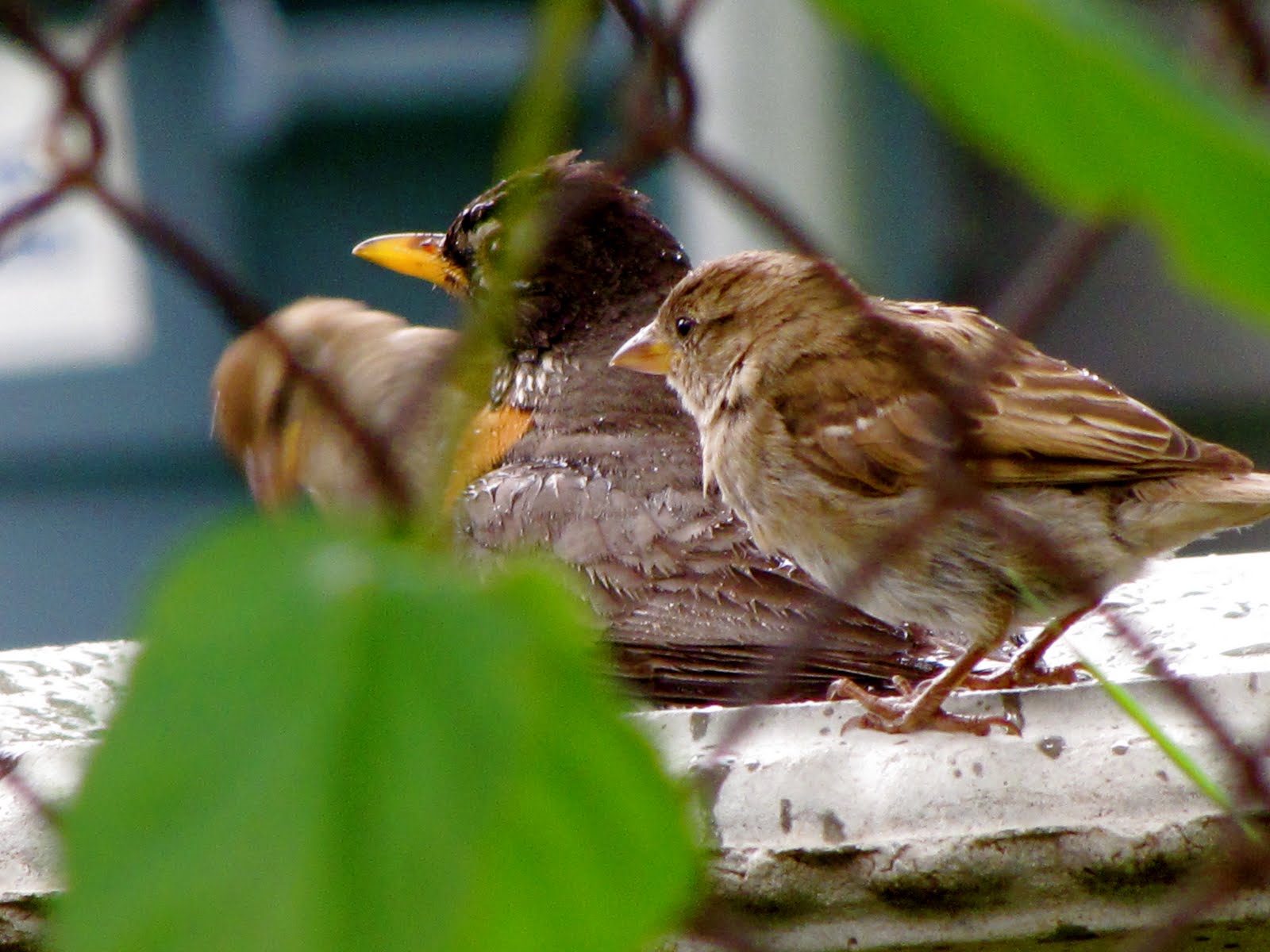
The poem's politics sound almost libertarian to me, which is odd coming a bohemian icon. Today’s Libertarians would probably call him a pink Communist fish and throw him back. But in fact, cummings’ Nature doesn't need human, artificial constructs like unions and negotiations. Thrushes (think robins) and owls just sing along together happily. It’s a choir out there, not a cacophony.
I like a lot of cummings, but this is a fool’s paradise, a poem that offers a childish, facile argument. Nature doesn't have unions because, in nature, the strong simply kill the weak; usually predators eat prey raw (because the prey did not unionize).
Yeah, that nature. Wake up, you romanticizing, idealizing songster.
However, and speaking of song, I am pleased and impressed that cummings, the wild, woolly, gentle old hippie, has set forth a well-constructed (yes, he constructed it, a very human thing to do, kind of the way birds build nests, fastidiously, purposefully) . . . a well-constructed good old-fashioned Shakespearean sonnet.
Moreover, his rhyming is quite pleasing—it’s not forced, and there are surprises, some genuine cleverness in “squirm . . . alarm,” “birch . . . march,” as well as both “their” and “saboteur.” All this is topped off with the odd, ingenious concluding stroke of half-rhyme in “incredible . . . until.”
One thing rhyme simply, inarguably does by its very nature, is to pull together the two rhyming words, at least briefly. It's a sensory, perhaps irrational phenomenon that invites us to consider some connection beyond the two words’ similar sounds.
This may or may not lead to some intriguing, additional ideas, but in skillful rhyming, we at least have a chance at more complicated thoughts than most love songs or nursery rhymes offer. For example, in “when serpents bargain,” we might “squirm” because we are “alarmed,” and one might fit that into the larger themes of the poem. Or maybe we’ll envision birch trees in March rather than June. Yes, this might be a stretch, but if we don't stretch some, we're rigid, immobile uninteresting. Yes, true, we must not force these associations, but if they turn out to be present, they create one more delight in a poem.

Well, here’s hoping I’ve just provoked more thought and discussion, rather than killing it with academic fog. Many a student has told me I'm crazy to look into such stuff so much (and here, I've only just begun). To me, analysis is neither an academic nor a psychotic obfuscation; it’s sunlight, a disinfectant. That probably means laying open still more viruses for others to examine. Is that a problem? Why?
I wonder if Christopher Smart would approve.
when serpents bargain by Edward Estlin Cummings
**


 Posts
Posts


