


Believe it or not, I’ve been trying to
shorten my posts, but one thing or another about a good poem teases me into
holding the podium. In Sidney Wade’s “Birding at the Dairy,” the lure was the
unlikely sum of three references to birds that are in some way “headed,” culminating
in a “many-headed” flock. A
yellow-headed blackbird, a brown-headed cowbird, and a “many-headed” “congress”
of starlings--so much “headed”-ness is surely no accident in a poem as
intelligent, faithful in detail and rich in metaphor as “Birding at the Dairy.” Wade’s witnessing of starlings hooked the minor league birder in me, word count be damned. So, courtesy of the Academy of American Poets website, here it is:
 |
| Starling |
Wade’s speaker is surprised by the birds, maybe a thousand, as they take flight, more or less in unison and in shifting patterns.
In fact, when we hear
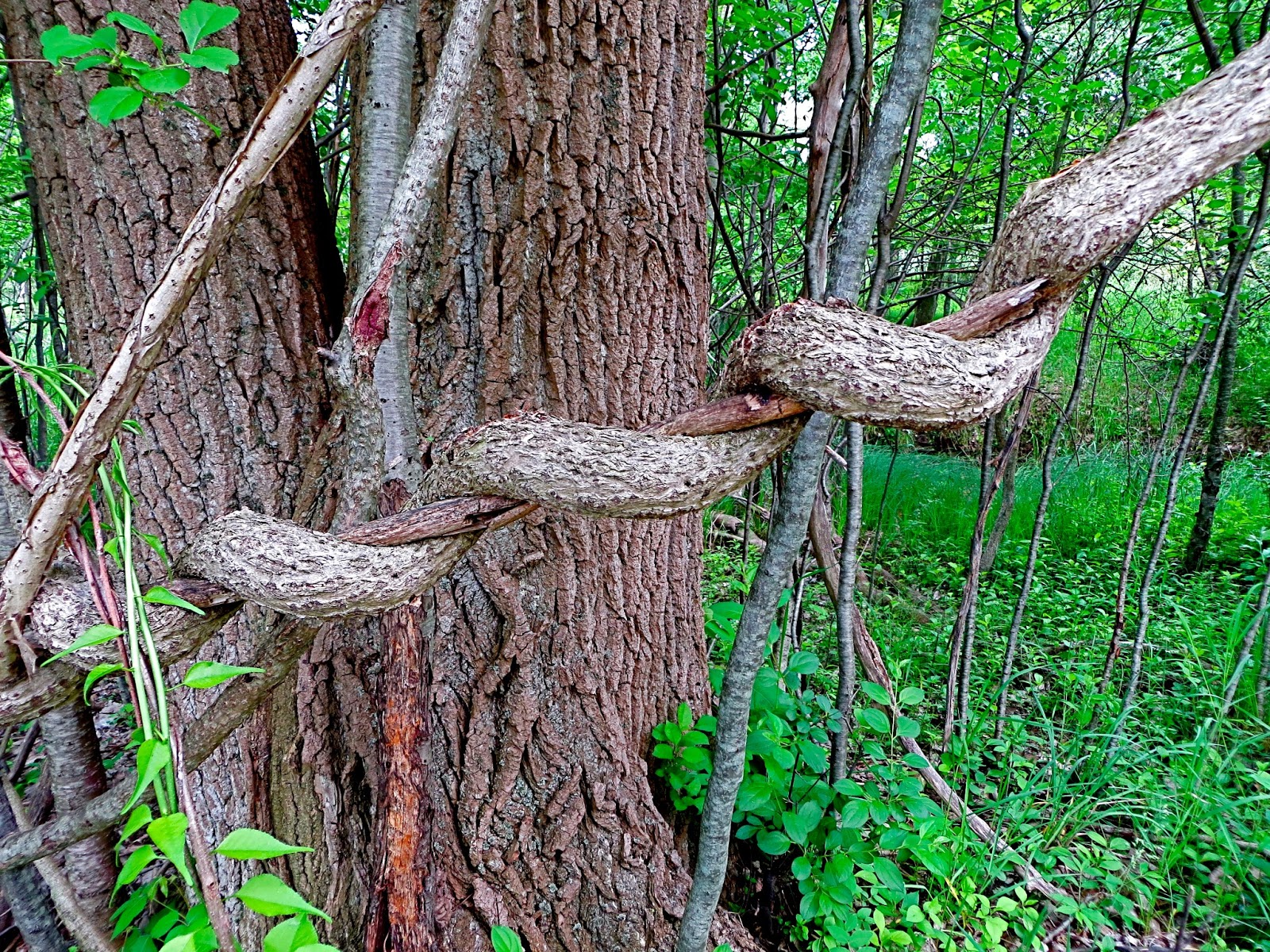
“undulate,” we might think of snakes. Among birds, starlings (which in the U.S. are invaders from Europe) have
a lousy reputation, and surely there’s something spooky about any many-headed
animal.
 |
| serpent |
Mythology supports a
feeling we're likely to have about polycephaly (having two or more heads), perhaps because we humans find that
our single heads are often more than we can cope with. In any case, having multiple heads is natural as a nightmare trope, in real-life as well as literature and
art.
It's no surprise,
then, that Wade’s many-headed bird tribe also alludes to ancient monsters. Wikipedia tells us that antiquity offered different portraits of Cerberus, the dog that guards the gates of Hell to prevent the damned from escaping: “The most notable difference is the number of its
heads: Most sources describe or depict three heads; others show it with two or
even just one; a smaller number of sources show (sic) a variable number,
sometimes as many as 50 or even 100.”
Another image from the Ancients is the Hydra monster:
“In Greek
mythology, the Lernaean Hydra (Ancient Greek:Λερναία Ὕδρα) was an ancient serpent-like chthonic water beast,
with reptilian traits (as its name evinces), that possessed many heads —
the poets mention more heads than the vase-painters could paint, and for each
head cut off it grew two more — and poisonous breath and blood so virulent even
its tracks were deadly.[1] The
Hydra of Lerna was killed by Hercules as the second of
his Twelve
Labours.” Surely Sidney Wade's undulating body of starlings suggests serpents, and in their sheer numbers and magical formations, perhaps the Hydra in particular.
 |
| serpent |
For more headed-ness, here’s Wikipedia on the
yellow-headed blackbird, a very handsome creature. “They
often migrate in huge flocks with other species of birds,” which is a behavior noted in
the poem. Also, “They nest in colonies, often sharing their habitat closely
with the Red-winged
Blackbird.”
http://www.youtube.com/watch?v=6-Pk-VMtZM0
http://www.youtube.com/watch?v=6-Pk-VMtZM0
Compared to monsters and magic, the "Dairy"
in the poem’s title seems all milk and cheese, a wholesome base for birders. However, in checking up
on yellow-headed blackbirds (again, in Wikipedia as well as The
Cornell Lab of Ornithology), I learned that they breed as far east and north as
Wisconsin, where dairy is king. Still, it's more reasonable to think of them as a predominantly western and southwestern bird, and thus a bird that seems out of place, or at least unexpected, near a dairy.
Also, note that it's a marsh bird that (paradoxically?) favors hot, dry climates, but the immediate connotation of “dairy” suggests Midwestern or Northeastern greenness. So the poem’s title info, “Birding at the Dairy,” might set up a contrast--yellow-headed blackbirds from the high plains and desert appear in the creamy Midwest. Landscape, birds, and relative humidity are all somewhat surprising or twofold in the poem’s world. Is this yen and yang, or a duality that implies conflict? Whatever the answer, surprise, if not unease, is an important feature.
Also, note that it's a marsh bird that (paradoxically?) favors hot, dry climates, but the immediate connotation of “dairy” suggests Midwestern or Northeastern greenness. So the poem’s title info, “Birding at the Dairy,” might set up a contrast--yellow-headed blackbirds from the high plains and desert appear in the creamy Midwest. Landscape, birds, and relative humidity are all somewhat surprising or twofold in the poem’s world. Is this yen and yang, or a duality that implies conflict? Whatever the answer, surprise, if not unease, is an important feature.
 |
| brown-headed cowbird |
The cowbirds make a life-and-death mess of things
for the other birds that host them, but they’re also just doing what they’re wired
to do. Considering the implications of that for humans is another topic, and true, we are not birds. Still, go ahead
and consider it. Such exploration is one of the main benefits of poetry.
Birders
seek out new or rare birds—or birds with singular beauty or singular behavior, such as starlings, which really do “swarm” and “undulate.” (See the video below). Some species carry the brand of
scoundrel, yet their appearance and some of their behaviors are stunning. In addition to undulating, and convening as a “congress,” and “murmur”ing
as a collective, look what else Sidney Wade’s starlings do. They are a:
maneuvering
wave
that veers
and
wheels, a fleet
and
schooling swarm
in
synchronous alarm,
a
bloom radiating
in
ribbons, in sheets,
in
waterfall,
a
murmuration
of
birds
that
turns
liquid
in air . . . .
It’s a visual
symphony. If you doubt it, see the video in the link below. (In fact, please see it, period). Why should we be
surprised that such an image suddenly rhymes at the end, as the word “prayer” echoes
“air”?
But it’s a “seething” prayer, which calls up feelings of fury and aggression—appropriate for many-headed animal-monsters,
one of whom guards the River Styx at the boundary of Hell. And neither starling nor yellow-headed blackbird nor brown-headed cowbird has a pleasant song. What they issue is closer to a growl, glug and screech than a lullaby, yet Wade calls it a prayer. She catches the paradox or duality or dichotomy—whatever it
is—at the heart of so much beauty.
Beauty wins, but in the wonder of it, it's also foreign and at least vaguely threatening. It's a beauty that is fleeting yet timeless, "fluid" yet suggestive of perfection and eternity, especially if we allow for the role of memory, which preserves our experiences with the gorgeous and the stunning.
In the face of magnificence, we are diminished, dwarfed, threatened by an image so alien and large, so much better than we are. It might even be divine; in the end, the starling's murmuration is
Beauty wins, but in the wonder of it, it's also foreign and at least vaguely threatening. It's a beauty that is fleeting yet timeless, "fluid" yet suggestive of perfection and eternity, especially if we allow for the role of memory, which preserves our experiences with the gorgeous and the stunning.
 |
| cardinal, snow, ambivalence |
In the face of magnificence, we are diminished, dwarfed, threatened by an image so alien and large, so much better than we are. It might even be divine; in the end, the starling's murmuration is
the
breath
of
a great
seething
prayer.
Surely this sounds like an epiphany, including the original religious overtones of the word. Yet we’re ambivalent
about it—its appetites! The glory we witness might overtake us—or it already has. So we are
humbled, and we pray. Maybe the starlings are the form of our prayer, and maybe, like them, we are so fervent that we seethe, croak and gurgle as we become our own prayer, in both
shape and content.
Is it because the
starlings follow each other—I almost said “blindly”—in such majestic patterns
of flight that they become a prayer? Whatever the answers, there’s no doubt that these birds are a gathering of disparate beings, and I suggest that this includes not only the
individual birds in the murmuration but also all birds and all of nature in a
coming together with humanity. Whoever offers that prayer and whoever is that
prayer, in all its visual drama, the sound of it is a murmur.
 |
| cardinal, snow, humility |
To appreciate how
spectacular a murmuration of starlings can be, and to read more about them,
click below. Oh, please click below and watch the two-minute video. I know it
takes time, but it’s a pleasure, and you’ll be a better person afterward.
My thanks to the Academy of American Poets Poem-A-Day for making me aware of the poem.
*
*


 Posts
Posts


